
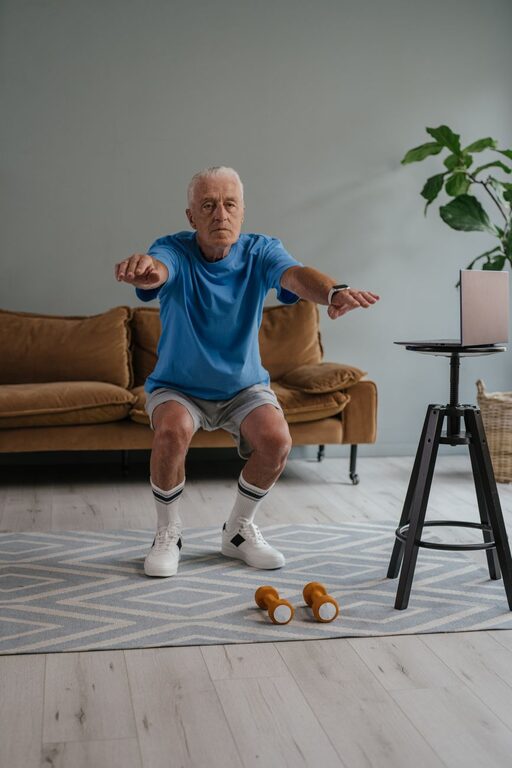
Good balance supports everyday movement, from walking across a room to reaching for an item on a shelf. It also helps you feel more confident when changing direction, stepping over objects, or standing on uneven ground.
The good news is that balance practice does not require a gym or complicated equipment. A few simple activities, repeated regularly, can help you build body awareness, coordination, and control. The key is to start slowly, use support when needed, and make balance practice a consistent part of your week.
How to Practice Balance Safely
Before trying any activity, choose a clear space free from loose rugs, clutter, and other tripping hazards. Practice near a sturdy counter, table, or wall so you can use it for support.
Wear comfortable shoes with a secure fit, or practice barefoot if the surface is clean and safe. Keep your movements controlled rather than rushing through them. If you feel unsteady, dizzy, or uncomfortable, stop and rest.
A short session of five to ten minutes can be enough to get started. As the activities become easier, you can gradually add more time or repetitions.
1. Single Leg Stand
The single leg stand is a simple way to practice stability and body control.
How to do it
- Stand behind a sturdy chair or beside a counter.
- Place your feet about hip-width apart.
- Keep your shoulders relaxed and look straight ahead.
- Slowly lift one foot a few inches off the floor.
- Hold the position for 10 to 20 seconds.
- Lower your foot and repeat on the other side.
Use one or both hands for support at first. Over time, try using just one hand, then lightly touching the surface with your fingertips. Keep your standing knee soft instead of locking it.
Try one to three rounds per side.
2. Heel-to-Toe Walk
This activity challenges balance while moving. It is similar to walking along a straight line.
How to do it
- Stand tall near a wall or counter.
- Step forward with one foot.
- Place the heel of that foot directly in front of the toes of your other foot.
- Continue taking slow steps in a straight line.
- Turn carefully and repeat in the opposite direction.
Take 10 to 15 steps at a time. If placing your feet heel-to-toe feels too difficult, widen the space between your feet slightly. Focus on a steady pace and an upright posture.
For added variety, try walking toward a visible target, such as a mark on the floor. Avoid looking down the entire time.
3. Sit-to-Stand Practice
Sit-to-stand movements strengthen the legs while encouraging control and stability. They also reflect a movement you use throughout the day.
How to do it
- Sit near the front edge of a sturdy chair.
- Place your feet flat on the floor, about hip-width apart.
- Lean forward slightly while keeping your back comfortable.
- Press through your feet and stand up slowly.
- Pause briefly once standing.
- Slowly lower yourself back into the chair.
Try five to ten repetitions. Use your hands on the chair or your thighs if needed. As you gain confidence, practice with your arms crossed over your chest, but only if you can remain steady.
Avoid dropping quickly into the chair. A slow lowering motion helps you practice control.
4. Marching in Place
Marching in place works on weight shifting, coordination, and balance. It can be done almost anywhere.
How to do it
- Stand tall with your feet comfortably apart.
- Hold a counter or the back of a chair if needed.
- Lift one knee a few inches.
- Lower the foot and lift the opposite knee.
- Continue alternating sides at a comfortable pace.
Start with 20 to 30 seconds. Rest, then repeat one or two more times. Keep your upper body relaxed and avoid leaning from side to side.
As the movement becomes easier, pause briefly at the top of each step. This adds a balance challenge without requiring faster movement.
5. Side Steps
Side steps help you practice moving in a different direction while staying controlled.
How to do it
- Stand with your feet together near a counter or wall.
- Step to the side with one foot.
- Bring the other foot over to meet it.
- Continue for five to ten steps.
- Repeat in the opposite direction.
Keep your toes pointing forward and avoid crossing your feet. Bend your knees slightly and use small steps at first.
You can make this activity part of a household routine by taking a few careful side steps while moving along a kitchen counter or open hallway.
6. Toe and Heel Raises
Toe and heel raises help you practice shifting your weight forward and backward while strengthening important lower-leg muscles.
How to do it
For toe raises:
- Stand behind a sturdy chair.
- Keep your heels on the floor.
- Lift your toes and the front of your feet.
- Lower them slowly.
For heel raises:
- Keep the balls of your feet on the floor.
- Lift your heels gradually.
- Pause for a moment.
- Lower your heels with control.
Complete eight to 12 repetitions of each movement. Hold the chair lightly and keep your body upright. Avoid bouncing or moving too quickly.
7. Reach and Return
This activity adds gentle movement to standing balance. It encourages you to shift your weight while staying aware of your position.
How to do it
- Stand near a counter or wall.
- Keep your feet about hip-width apart.
- Reach one arm forward at shoulder height.
- Return your arm to your side.
- Reach to the side, then return.
- Repeat with the other arm.
Perform five reaches in each direction per side. Keep both feet on the floor and move within a comfortable range. The goal is to remain steady, not to reach as far as possible.
Create a Weekly Balance Routine
Consistency matters more than long workouts. You can fit balance practice into different parts of your week:
– Monday: Single leg stands and heel-to-toe walks
– Tuesday: Sit-to-stand practice and marching in place
– Wednesday: Rest or take a relaxed walk
– Thursday: Side steps and toe and heel raises
– Friday: Repeat your favorite three activities
– Saturday: Practice balance outdoors on a clear, even surface
– Sunday: Gentle stretching and easy movement
You can also add one activity to an existing habit. Try single leg stands while waiting for water to boil, marching in place during a short break, or practicing sit-to-stands before settling into a chair.
Make Progress Gradually
Balance can change from day to day, so there is no need to make every session harder. When an activity feels comfortable, progress by adding a few seconds, completing another repetition, or reducing your reliance on support.
Change only one part at a time. For example, continue holding the counter while increasing the duration, rather than removing support and adding more repetitions at the same time.
With regular practice, these simple activities can become an easy way to add purposeful movement to your weekly routine. Focus on steady progress, good posture, and movements that feel controlled and manageable.